
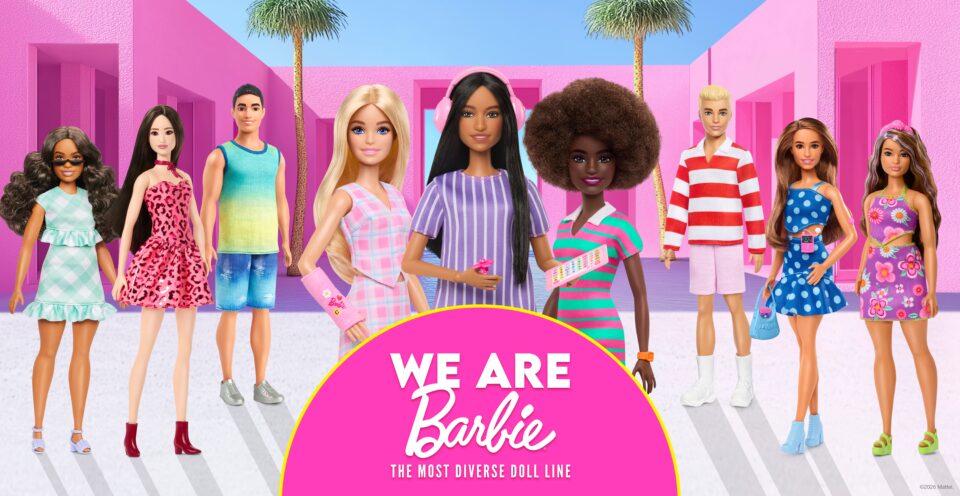
Mattel, Inc. just announced that a new doll is coming to town… the first-ever Barbie® with autism! The doll was created with guidance from the Autistic Self Advocacy Network (ASAN), a community run by and for autistic people who work to support self-advocacy and to change the way people think about autism. The doll will be featured alongside other Barbie Fashionistas, a collection that highlights diversity in all forms, from skin tones and hair textures to body types and disabilities. Mattel’s aim is to champion representation for children through play.
“Barbie has always strived to reflect the world kids see and the possibilities they imagine, and we’re proud to introduce our first autistic Barbie as part of that ongoing work,” shares Jamie Cygielman, Global Head of Dolls, Mattel. “The doll, designed with guidance from the Autistic Self Advocacy Network, helps to expand what inclusion looks like in the toy aisle and beyond because every child deserves to see themselves in Barbie.”
The autistic Barbie is making her grand debut with all of her essential fabulous accessories: a pink finger clip fidget spinner (that actually spins!), noise-cancelling headphones, and a tablet, each item reflecting the experience of individuals on the autism spectrum. “As proud members of the autistic community, our ASAN team was thrilled to help create the first-ever autistic Barbie doll,” expresses Colin Killick, Executive Director, ASAN. “It is so important for young autistic people to see authentic, joyful representations of themselves, and that’s exactly what this doll is. Partnering with Barbie allowed us to share insights and guidance throughout the design process to ensure the doll fully represents and celebrates the autistic community, including the tools that help us to be independent.”
Other intentional design choices include a slightly shifted eye gaze, representing how some members of the autistic community may avoid direct eye contact, and elbow and wrist articulation, which allows for stimming and other hand gestures that some autistic community members use to process sensory information or express emotion.
Already, Barbie is getting feedback that the dolls are connecting with and sparking joy in those in the autism community who the doll represents. “I’ve been collecting Barbie dolls since I was four years old, and now this autistic Barbie will be one of my favorites,” says Madison Marilla, Autism Advocate and Creative Entrepreneur. “This autistic Barbie makes me feel truly seen and heard.”
To commemorate the launch, Barbie is even donating over 1,000 of the new Barbie dolls with autism to leading pediatric hospitals across the country.
You will soon be able to purchase the new Barbie at Target, Walmart, and Mattel Shop.